L’Adoration de la Terre (The Adoration of the Earth)
The Genuin debut album by the piano duo Pisareva-Tchaidze featuring three key works of classical modernism
 back
backNadezda Pisareva Piano
Georgy Tchaidze Piano
Tonmeister: Michael Silberhorn
Recording: Mendelssohnsaal, Gewandhaus Leipzig
GEN 26968 EAN 4260036259681
Release 8.5.2026Offer until 31.5.26EUR 18,90 EUR 16,90
Release in May 2026
Pre-order now!
delivery time 2–4 working days
Europe: shipping costs €5.90,
delivery time 3–7 working days

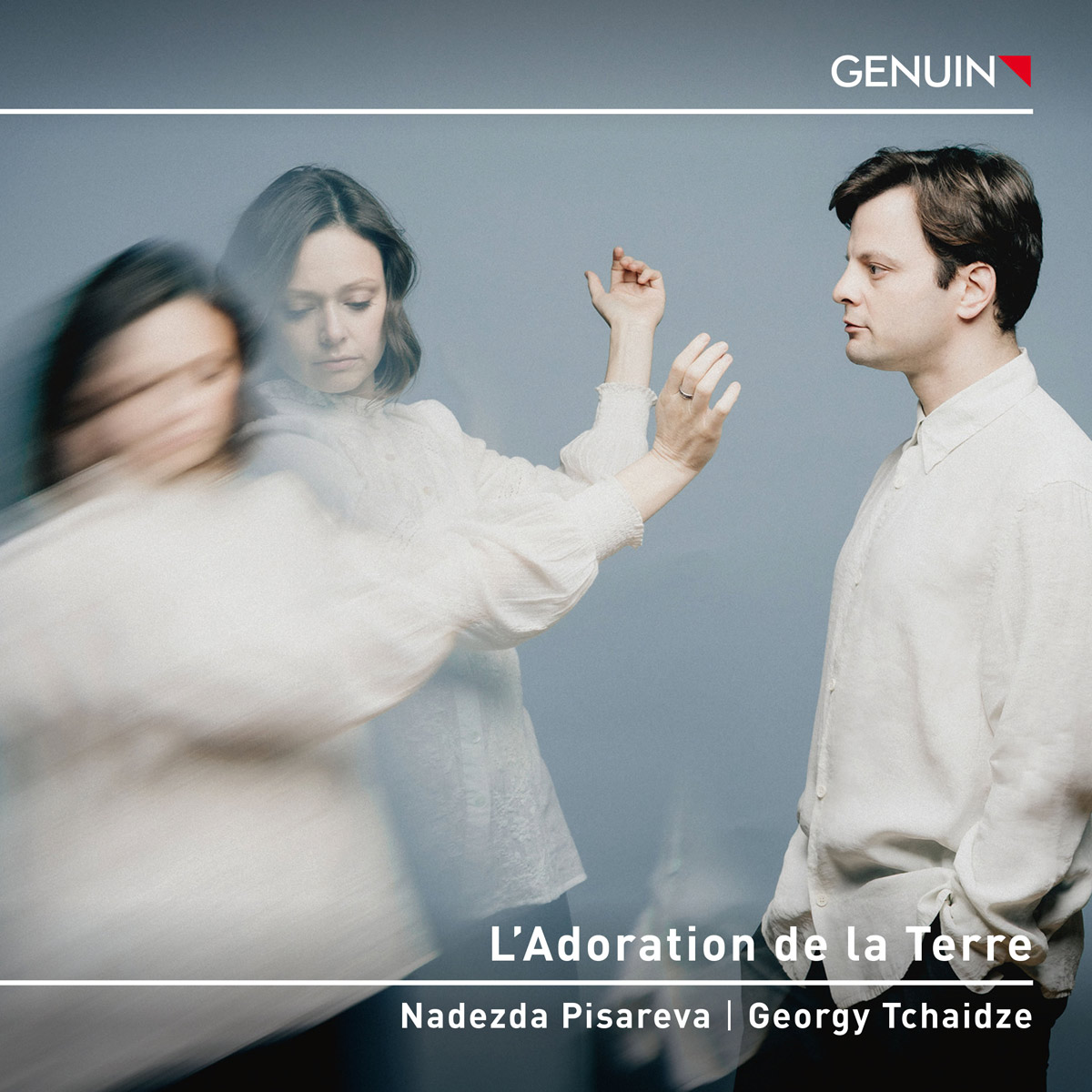
Music as ritual: On their debut GENUIN album, the internationally acclaimed piano duo Pisareva–Tchaidze presents three landmark works of early modernism. Stravinsky’s „Le Sacre du Printemps“ — a piece that has stood at the heart of their repertoire for fifteen years — is set alongside Debussy’s „Épigraphes antiques“ and Bartók’s „Two Pictures“. Written within the same turbulent historical moment shortly before the First World War, these compositions reflect a time of profound cultural upheaval. The album explores the interplay between them — their archaic energy, their rhythmic vitality, and their dialogue between past and present. The duo’s finely calibrated ensemble playing brings striking rhythmic precision and luminous clarity of sound to these works.
Nadezda Pisareva Piano
Georgy Tchaidze Piano
Tonmeister: Michael Silberhorn
Recording: Mendelssohnsaal, Gewandhaus Leipzig
Music as ritual: On their debut GENUIN album, the internationally acclaimed piano duo Pisareva–Tchaidze presents three landmark works of early modernism. Stravinsky’s „Le Sacre du Printemps“ — a piece that has stood at the heart of their repertoire for fifteen years — is set alongside Debussy’s „Épigraphes antiques“ and Bartók’s „Two Pictures“. Written within the same turbulent historical moment shortly before the First World War, these compositions reflect a time of profound cultural upheaval. The album explores the interplay between them — their archaic energy, their rhythmic vitality, and their dialogue between past and present. The duo’s finely calibrated ensemble playing brings striking rhythmic precision and luminous clarity of sound to these works.
Audio Player
Tracklist
- Igor Stravinsky (1882–1971)
The Rite of Spring, K015
I. The Adoration of the Earth: Introduction - I. The Adoration of the Earth: The Augurs of Spring – Dances of the Young Maidens
- I. The Adoration of the Earth: Game of Abduction
- I. The Adoration of the Earth: Spring Rounds
- I. The Adoration of the Earth: Games of the Rival Tribes
- I. The Adoration of the Earth: Procession of the Sage
- I. The Adoration of the Earth: The Kiss of the Earth
- I. The Adoration of the Earth: Dance of the Earth
- II. The Sacrifice: Introduction
- II. The Sacrifice: Mystic Circles of the Young Maidens
- II. The Sacrifice: Glorification of the Chosen One
- II. The Sacrifice: Evocation of the Ancestors
- II. The Sacrifice: Ritual Action of the Ancestors
- II. The Sacrifice: Sacrificial Dance - The Chosen One
- Claude Debussy (1862–1918)
Six Épigraphes antiques L. 131, CD. 139
To invoke Pan, god of the summer wind - For a Tomb Without a Name
- In order that the night be propitious
- For the dancer with crotales
- For the Egyptian woman
- To thank the morning rain
- Béla Bartók (1881–1945)
Two Pictures, Op. 10, BB 59
In full Flower - Village Dance
Music as ritual: On their debut GENUIN album, the internationally acclaimed piano duo Pisareva–Tchaidze presents three landmark works of early modernism. Stravinsky’s „Le Sacre du Printemps“ — a piece that has stood at the heart of their repertoire for fifteen years — is set alongside Debussy’s „Épigraphes antiques“ and Bartók’s „Two Pictures“. Written within the same turbulent historical moment shortly before the First World War, these compositions reflect a time of profound cultural upheaval. The album explores the interplay between them — their archaic energy, their rhythmic vitality, and their dialogue between past and present. The duo’s finely calibrated ensemble playing brings striking rhythmic precision and luminous clarity of sound to these works.