Apollo & Marsyas
A concept album inspired by the story of Apollo and Marsyas from Ovid's "Metamorphoses"
 back
back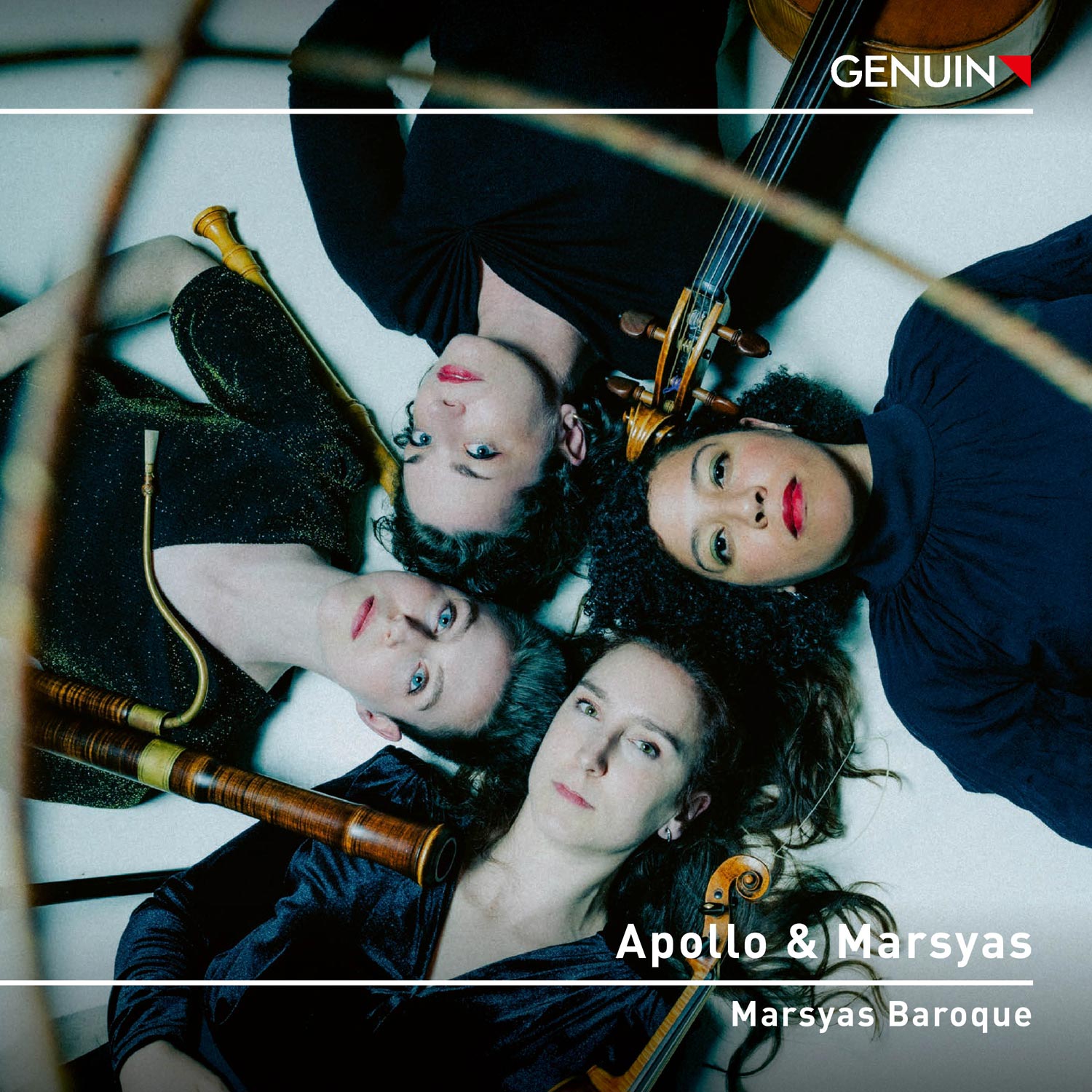
GEN 26997 EAN 4260036259971
Release 2.10.2026Offer until 31.10.26EUR 18,90 EUR 16,90


Narration Scripts
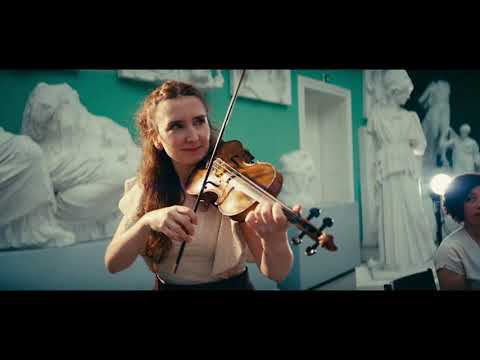
"Pitiful indeed—most pitiful—was the fate of the satyr Marsyas." (Ovid, „Metamorphoses“) Apollo versus Marsyas—a musical contest pushed to its ultimate limits. On its new GENUIN album, the German-Spanish ensemble Marsyas Baroque transforms this ancient myth into a compelling musical narrative: an instrumental pasticcio that follows the unfolding story, interwoven with brief spoken texts that illuminate key moments along the way. Performed on historical instruments, works by Vivaldi, Telemann, Gesualdo, Reichenauer, and others enter into dialogue with a newly commissioned composition by Alessandra Bellino. Who decides the outcome of a contest over music itself? The answer is as unsettling as it is unforgettable.
 Show YouTube Video
By clicking, you agree to the transfer of user data to YouTube.Show YouTube Video
By clicking, you agree to the transfer of user data to YouTube.For more information, please refer to our
privacy policy.
Narration Scripts
"Pitiful indeed—most pitiful—was the fate of the satyr Marsyas." (Ovid, „Metamorphoses“) Apollo versus Marsyas—a musical contest pushed to its ultimate limits. On its new GENUIN album, the German-Spanish ensemble Marsyas Baroque transforms this ancient myth into a compelling musical narrative: an instrumental pasticcio that follows the unfolding story, interwoven with brief spoken texts that illuminate key moments along the way. Performed on historical instruments, works by Vivaldi, Telemann, Gesualdo, Reichenauer, and others enter into dialogue with a newly commissioned composition by Alessandra Bellino. Who decides the outcome of a contest over music itself? The answer is as unsettling as it is unforgettable.
Show YouTube Video
By clicking, you agree to the transfer of user data to YouTube.Show YouTube Video
By clicking, you agree to the transfer of user data to YouTube.For more information, please refer to our
privacy policy.
Audio Player
Tracklist
- Dario Castello (1602–1631)
Sonate concertate in stil moderno, l ibro secondo
Sonata Quarta à due Soprani - Lesung
Prolog – Marsyas findet den Aulos - Johann Joachim Quantz (1697–1773)
Vivace alla Francese für Blockflöte solo QV 3:1:3 - Lesung
Prolog – A pollo auf dem Olymp - Pietro Locatelli (1695–1764)
L’arte del v iolino op. 3
Capriccio Nr. 1 für V ioline solo D-Dur - Lesung
Der Wettstreit – Marsyas zieht ein - Georg Philipp Telemann (1681–1767)
Die Satyrn in Arkadien, TWV 21:8
Chaconne comique - Lesung
Der Wettstreit – Maß und Rausch - Johann Caspar Ferdinand Fischer (1656–1746)
Musicalischer Parnassus
Toccata für Cembalo solo aus Suite Nr. 9 „Uranie“ - Antonio Vivaldi (1678–1741)
Concerto D-Dur RV 92
I. Allegro - II. (Ohne Satzbezeichnung)
- III. Allegro
- Lesung
Das Urteil – D ie Musen zögern - Michel Blavet (1700–1768)
Ille Recueil de Pièces
L’Entretien des Muses - Lesung
Das Urteil – A pollos List - Francesco Paolo Supriani (1678–1753)
Principij da imparare à suonare il v ioloncello e con 12 Toccate à s olo
Toccata X für Cello solo - Lesung
Das Urteil – D ie Glut des Zorns - Georg Philipp Telemann
Die Glut des Zorns, das Feuer der Rache TWV 1:338a - Lesung
Die Strafe – Marsyas’ Häutung - Alessandra Bellino (*1970)
Marsýas - Carlo Gesualdo (1566–1613)
Madrigali a c inque voci, Libro VI
Moro, lasso, al mio duolo - Lesung
Das Lamento – D ie Klage der Natur - Marin Marais (1656–1728)
Pièces en trio
Plainte – Deuxième Suite - Antonín Reichenauer (ca. 1694–1730)
Quartett g-Moll Rk 18
I. Adagio - II. Allegro
- III. Adagio
- IV. Tempo di Minuet
- Lesung
Marsyas’ Echo – Was bleibt - Johann Sebastian Bach (1685–1750)
Schmücke dich, o l iebe Seele BWV 654
Narration Scripts
"Pitiful indeed—most pitiful—was the fate of the satyr Marsyas." (Ovid, „Metamorphoses“) Apollo versus Marsyas—a musical contest pushed to its ultimate limits. On its new GENUIN album, the German-Spanish ensemble Marsyas Baroque transforms this ancient myth into a compelling musical narrative: an instrumental pasticcio that follows the unfolding story, interwoven with brief spoken texts that illuminate key moments along the way. Performed on historical instruments, works by Vivaldi, Telemann, Gesualdo, Reichenauer, and others enter into dialogue with a newly commissioned composition by Alessandra Bellino. Who decides the outcome of a contest over music itself? The answer is as unsettling as it is unforgettable.
Show YouTube Video
By clicking, you agree to the transfer of user data to YouTube.Show YouTube Video
By clicking, you agree to the transfer of user data to YouTube.For more information, please refer to our
privacy policy.